What is LOVO?
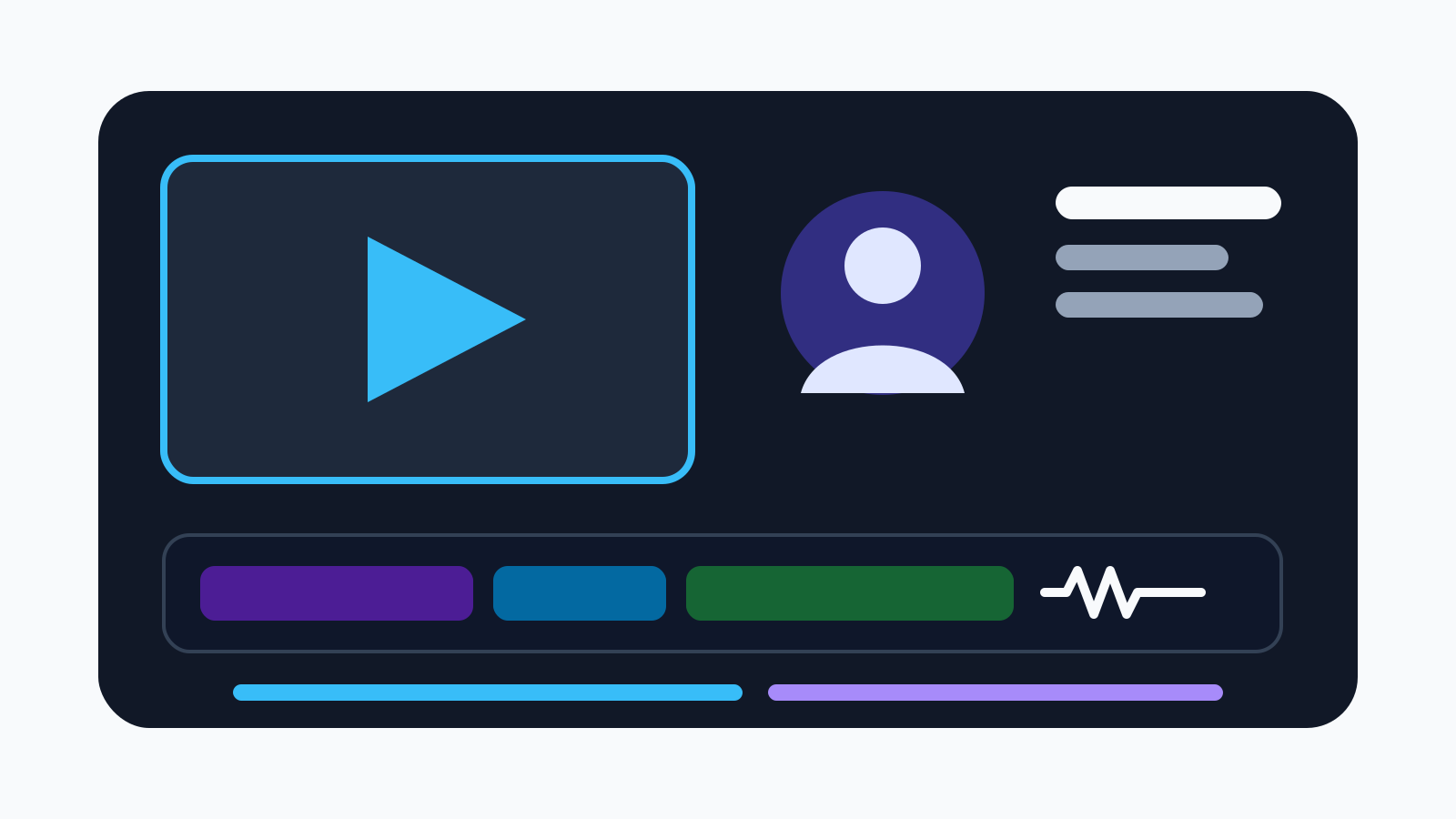
LOVO is an AI voice and narrated-video platform whose main workspace is called Genny. It combines text-to-speech generation, a voice library, voice cloning on eligible plans, pronunciation controls, script assistance, subtitles, stock or uploaded media, music, and a timeline editor. The aim is to let a user move from a written script to a finished voiceover or simple video without coordinating a recording studio and several separate applications.
The product is most relevant to training, explainers, marketing, presentations, product walkthroughs, and social videos. It can also help prototype narration before hiring an actor. It should not be treated as a universal replacement for human performance: emotional nuance, comic timing, character continuity, pronunciation, and local accent expectations vary by voice and language.
LOVO's official product page describes voice generation, cloning, scripts, subtitles, and video production inside Genny. Feature availability and allowances depend on the current subscription, so verify the plan table rather than relying on an older tutorial.
Core Genny workflow
A typical project begins with a script. Users can paste existing copy or use writing assistance to produce a first draft. AI-written narration still needs an editor. Remove unsupported factual claims, shorten sentences that sound unnatural when spoken, and mark names, abbreviations, dates, currencies, and technical terms for pronunciation review.
Next, the user selects a voice and generates speech. The most useful comparison is not a short demo sentence but a representative passage from the real project. Listen for pacing, stress, breath placement, numbers, acronyms, brand names, and transitions between emotional sections. A voice that sounds polished in a promotional sample may be less convincing in a long lesson or dense technical script.
Pronunciation and timing controls can improve difficult passages. Break long paragraphs into smaller blocks so revisions do not require regenerating an entire project. Keep a pronunciation list for recurring names and terminology. For multilingual work, review each language with a fluent speaker rather than assuming one voice family performs equally well everywhere.
Genny can align narration with subtitles and media in a video timeline. This is convenient for straightforward explainers and slide-like scenes. Projects that need complex compositing, advanced color work, detailed sound design, or frame-accurate animation may still be better finished in a dedicated editor after exporting the voice track.
Voice cloning and consent
Voice cloning can create a reusable synthetic voice from recordings. It is useful when a creator wants consistent narration or a team needs approved localization, but it carries higher risk than choosing a stock voice. The person represented by the recording should give explicit permission for the intended purpose, channels, languages, duration, and people allowed to generate new speech.
Do not clone public figures, employees, customers, actors, or relatives merely because recordings are available online. A technically successful clone can still violate publicity, copyright, contract, employment, fraud, or platform rules. Organizations should document consent and revoke access when a relationship or project ends.
Pricing and plan selection
LOVO offers a limited free plan for evaluating Genny. The official pricing page separates paid tiers by generation allowances and features such as cloning, downloads, collaboration, storage, and usage rights. These details change, so this review avoids freezing exact quotas.
Estimate cost from finished audio minutes plus expected regeneration. A ten-minute final video may require considerably more generated speech when scripts and pronunciations are revised. Teams should also check whether a plan supports multiple users, shared assets, commercial publication, and the number of cloned voices they actually need.
Privacy and production safety
LOVO's privacy policy is the starting point for understanding account, upload, generated-content, analytics, and service-provider data. Voice samples deserve particular care because a recording can carry biometric or identity implications in some jurisdictions. Remove unrelated conversation, obtain consent, and avoid uploading confidential material that is not required to build the voice.
Generated speech can mispronounce or change the apparent meaning of a sentence. Listen to every final export from beginning to end. Verify phone numbers, prices, legal statements, health instructions, and calls to action against the approved script. Keep the written source and final audio together so later updates are traceable.
Strengths and limitations
LOVO's main strength is workflow consolidation. A user can draft, narrate, subtitle, assemble, and export in one browser environment. This is faster than moving between unrelated tools for routine narrated content, and the variety of voices can help early localization.
The trade-off is that convenience can hide quality-control work. Voice selection, pronunciation, consent, factual review, and mixing still require human judgment. A general video editor inside a voice platform may also be less flexible than a specialist production suite.
Who should choose LOVO?
LOVO is a good fit for teams producing recurring explainers, learning modules, product videos, presentations, and localized narration. It is most valuable when a complete browser workflow matters more than maximum control over every audio parameter.
Compare ElevenLabs when voice and audio generation depth is the priority, Murf when business voiceover workflows and collaboration are central, or Descript when transcript-led recording and editing matter more. Run a real script through several voices before choosing any subscription.
Visit the official LOVO website