
What is Wisecut?
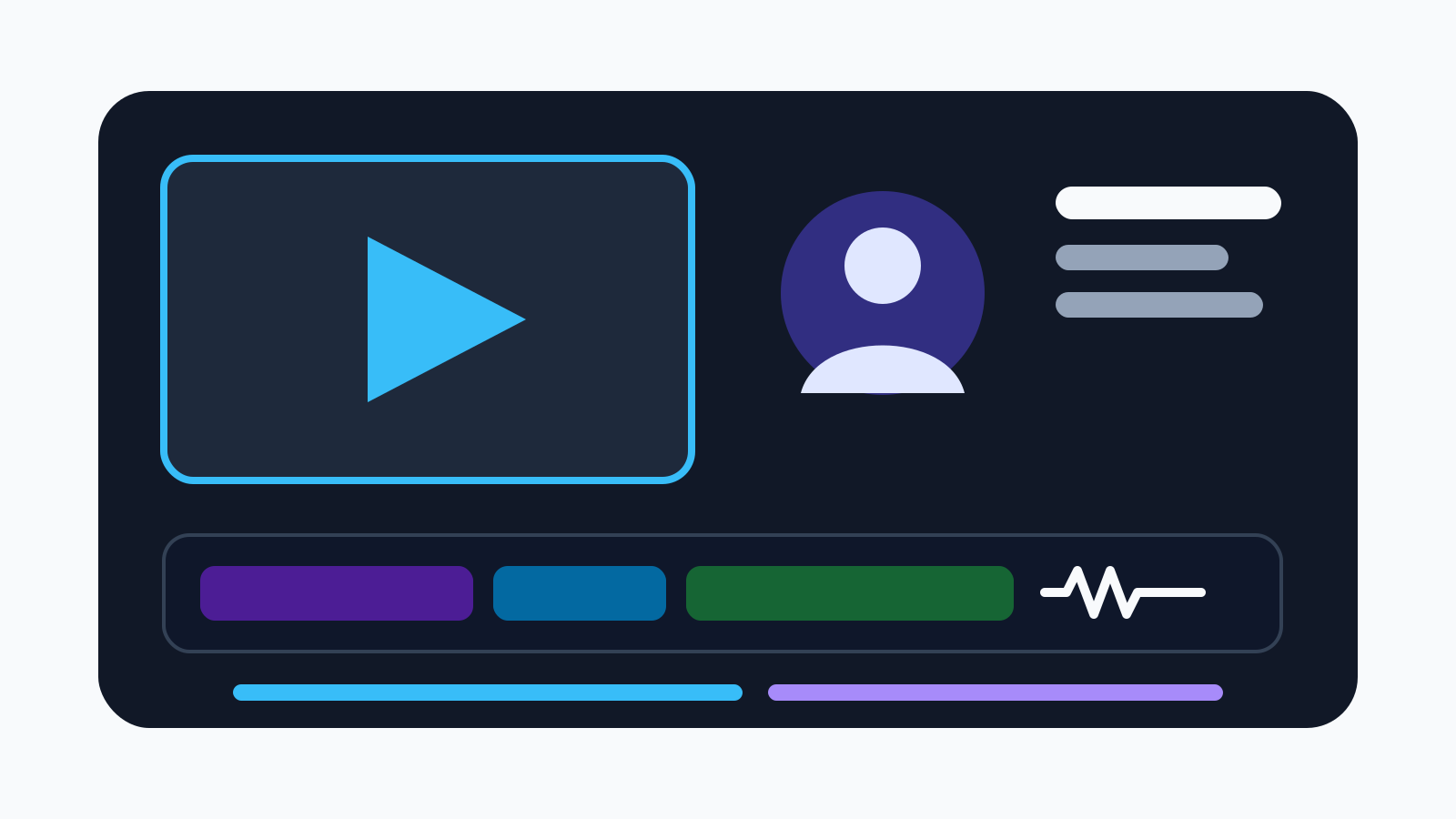
Wisecut is a browser-based AI video editor designed mainly for speech-led material. A creator uploads a recording, and the system analyzes speech to build a transcript or storyboard, remove selected pauses, add subtitles, place background music with automatic ducking, and create shorter clips or alternate aspect ratios. Paid capabilities add combinations of higher resolution, more processing, translation, noise reduction, facial tracking, voice tools, and social distribution features.
The tool targets repetitive edit decisions rather than text-to-video generation. It is most relevant when the raw material already contains the story: interviews, podcasts, tutorials, courses, webinars, reviews, and direct-to-camera updates. Complex narrative films, multicamera performances, and effects-heavy timelines still need a full manual editor.
From upload to first cut
Wisecut's workflow starts by uploading source media to its cloud service. The platform transcribes speech and uses the transcript to support story editing. Automatic silence removal can compress dead air, while an AI storyboard helps identify or rearrange sections. Social clipping and aspect-ratio tools can prepare shorter vertical, square, or landscape outputs.
Automation is not neutral. A pause can signal emphasis, uncertainty, grief, humor, or a speaker change. Removing every silence makes speech tiring and can alter meaning. Review the entire sequence at normal speed, not only the transcript. Restore breaths and pauses where they support comprehension.
Check every cut for truncated words, jump cuts, lost reactions, incorrect speaker boundaries, and discontinuous hand or object movement. Automatic punch-in and face tracking can crop gestures, captions, slides, products, or a second participant. Provide a manual framing option for important shots.
Captions, translation, audio, and music
Automatic subtitles improve reach and accessibility only when corrected. Verify names, technical terms, punctuation, numbers, profanity, dialect, and speaker changes. Keep captions within safe areas for each social platform and avoid covering faces, demonstrations, or on-screen text. Translated subtitles need a fluent reviewer because a grammatically smooth translation can still change the speaker's claim.
Wisecut offers background music and AI-powered audio ducking that lowers music under speech. Listen with headphones and on a phone speaker. Ducking can pump between words, amplify room noise, or hide quiet voices. Noise reduction and studio-voice processing can create metallic artifacts or change vocal character.
Only use music and sound effects licensed for the intended platform, territory, audience, advertising status, and duration. A track available inside a service is not automatically cleared for every client campaign or redistribution. Preserve license evidence and a clean voice-only master.
Plans, processing, and project economics
The official pricing page currently lists a free entry point, paid creator tiers, and enterprise or API options. Plans allocate AI processing time and vary by output resolution, storage, upload length, export duration, file size, downloads, frame rate, and premium features. Current pages can show promotions or localized plan structures, so confirm the checkout terms rather than relying on an old review.
Processing allocation is generally tied to source minutes or AI tasks, not only final clip length. A one-hour upload can consume substantial allowance even if the final result is five minutes. Reprocessing after a transcript, language, or edit change may use more credits. Current pricing materials say monthly credits do not roll over.
Test with representative source length, resolution, language, speaker count, and desired output. Count upload, processing, correction, render, and download time. The relevant comparison is total time to an approved clip versus Descript, CapCut, a conventional editor, or an outside contractor.
Cloud storage, privacy, and deletion
Wisecut says the editor is online and projects are saved in the cloud. Its privacy notice describes information that can include uploaded content, images, voices, identifiers, usage, devices, credentials, support, and service metrics. Video can reveal faces, homes, screens, location, health, financial information, customer data, and bystanders even when the spoken topic seems harmless.
The customer agreement says Wisecut will use customer content as necessary to provide or maintain services and describes security and legal-disclosure terms. Buyers should review the current agreement, subprocessors, processing region, retention, project expiry, backups, support access, and deletion. Pricing pages note that inactive free accounts or projects can be subject to deletion under stated conditions; keep an independent master and transcript.
Obtain recording and editing consent from speakers and anyone whose image or voice appears. Remove credentials, notifications, private screens, and unintended bystanders before upload. For children, health information, legal advice, employee matters, or regulated customer calls, use an approved workflow or do not upload.
Rights, editorial accuracy, and publishing
The uploader must have rights to source footage, logos, slides, photographs, music, clips, and voices. Cutting a long video into a short clip can remove qualifiers and reverse the perceived meaning. Preserve enough context, identify the speaker and date accurately, and obtain approval for high-risk quotations.
Wisecut's acceptable-use rules prohibit unlawful, harmful, fraudulent, infringing, and privacy-violating content. Platform acceptance does not establish that a clip is truthful or licensed. Human review is required before enabling automatic distribution or connecting social accounts. Verify caption text, thumbnail, description, hashtags, link, audience, account, schedule, disclosure, and music for every destination.
Alternatives and decision guidance
Compare Wisecut with Descript for transcript-based editing and broader audio/video production, CapCut AI for a large social editing toolkit, InVideo AI for script-to-video generation, or Runway for generative and advanced video workflows.
Use a real long recording and produce three different social outputs. Measure transcript corrections, restored cuts, framing fixes, audio cleanup, export quality, rights work, cloud risk, and processing cost. Wisecut is valuable when its automation removes repetitive labor while an editor remains responsible for meaning and final approval.
Visit the official Wisecut website