What is ChatGPT?
ChatGPT is OpenAI's general-purpose AI assistant. It supports conversational writing, brainstorming, summarization, coding help, web search, file analysis, data work, image generation, and voice interactions. The product is available through a browser and official desktop and mobile apps, which makes it a practical default for people who want one interface for several kinds of work.
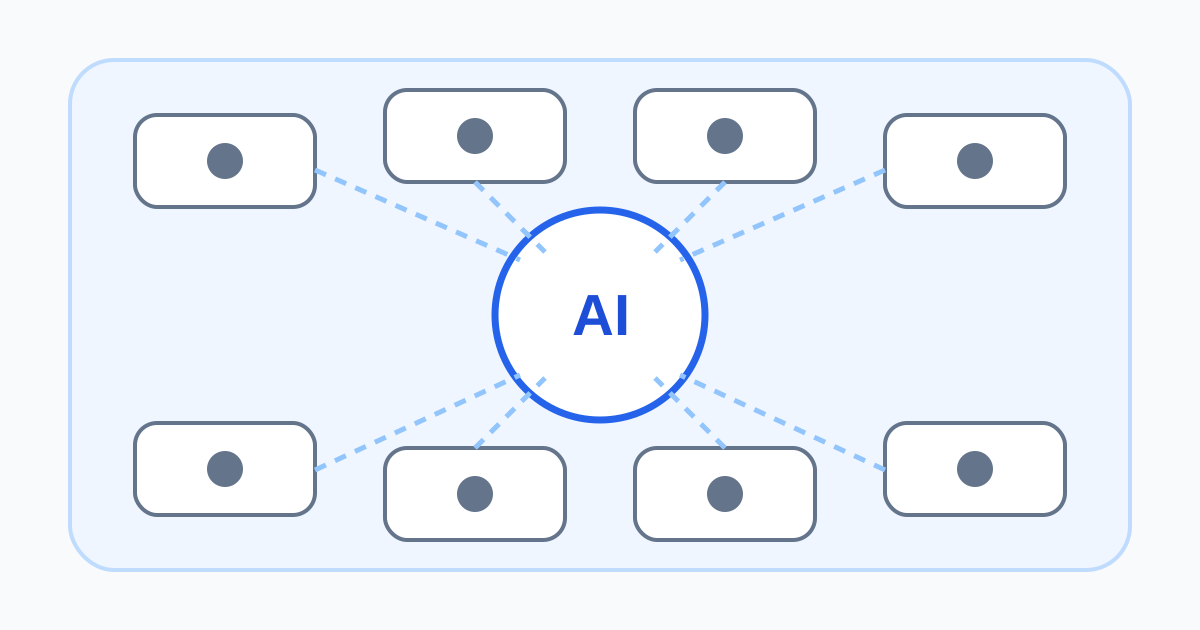
The important distinction is that ChatGPT is more than a single model. It is a product layer that combines models with tools, account features, saved context, projects, and plan-specific limits. That means a comparison based only on a model name can become outdated quickly. For a useful buying decision, compare the complete workflow: what you can upload, which tools are available, how often you can use them, how conversations are organized, and what data rules apply to your account.
Core ChatGPT workflows
For writing, ChatGPT can help turn a rough brief into an outline, draft alternatives, revise tone, or critique a document against explicit criteria. It is most useful when you provide the intended reader, constraints, examples, and a definition of a successful result. Treat the first output as material for review rather than final copy.
For research, ChatGPT can search the web and return linked sources. This shortens discovery, but it does not remove verification work. Open the cited pages, confirm that each source supports the adjacent statement, and check publication dates. When a question is high stakes or time sensitive, use primary sources and independently verify the conclusion.
File and data workflows allow users to upload documents, spreadsheets, images, and other supported material for summarization or analysis. This can be effective for locating themes, restructuring information, or producing an initial chart or explanation. Results still depend on file quality, context, and instructions. Check calculations against the original data and avoid assuming that every part of a long document was considered equally.
ChatGPT also supports image and voice experiences on eligible plans and platforms. These are useful when the task is easier to describe conversationally or when a visual draft can accelerate ideation. Availability, usage limits, and output options can differ across accounts and regions.
Pricing and plan context
OpenAI offers a free version of ChatGPT and several paid options for individuals and organizations. The official ChatGPT pricing page is the source of truth for current plan names, prices, model access, usage limits, and collaboration features.
The free plan is a sensible way to evaluate the basic interface and occasional workflows. Paid individual plans are more relevant when work repeatedly hits limits or depends on advanced tools. Business and enterprise plans add organizational administration and different data protections. Do not choose a plan solely because it lists a newer model: assess whether the features and limits change the tasks you actually perform.
Because prices, limits, and models change more often than the underlying use cases, this review does not freeze a detailed quota table. Verify the official page immediately before purchasing.
Privacy and data considerations
Before uploading sensitive material, distinguish between consumer ChatGPT and organization products. OpenAI documents privacy choices for individual users and separate protections for business data. Its privacy overview explains training sources and user controls, while the privacy policy provides the governing details.
A safe workflow is to remove unnecessary personal or confidential information, check the settings tied to your account, and confirm whether your organization permits the service. Projects, memory, connectors, shared conversations, and feedback features can each affect what context is retained or exposed. A paid subscription is not, by itself, proof that every confidential-data requirement is satisfied.
Strengths and limitations
ChatGPT's main strength is breadth. One account can cover drafting, analysis, search, coding, files, voice, and visual ideation without requiring a separate tool for every step. Its cross-platform availability also helps users continue work between devices.
That breadth creates trade-offs. The product changes frequently, so tutorials and plan comparisons age quickly. Generated answers may sound certain even when a source is weak, a calculation is wrong, or a requested constraint was missed. Long-running workflows also require good organization; otherwise context becomes scattered across conversations.
Who should choose ChatGPT?
ChatGPT is a strong starting point for individuals and teams that need a flexible assistant and already have a human review process. It is particularly useful when the workload changes from day to day: drafting one moment, analyzing a file the next, and researching a question afterward.
Consider Claude when long-form reading and writing are central, Perplexity when citation-led web research is the primary task, or Gemini when tight integration with Google's ecosystem matters most. The right choice is the product that performs your repeated workflow reliably within your privacy and budget constraints, not the assistant with the longest feature list.
Visit the official ChatGPT website