
What is Devin?
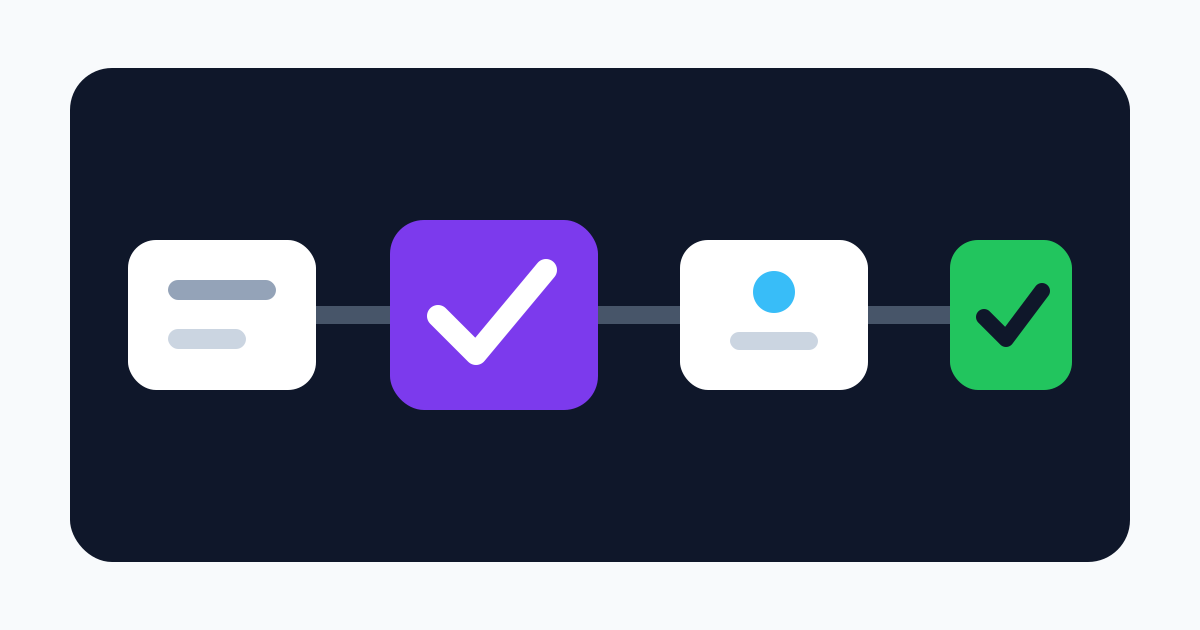
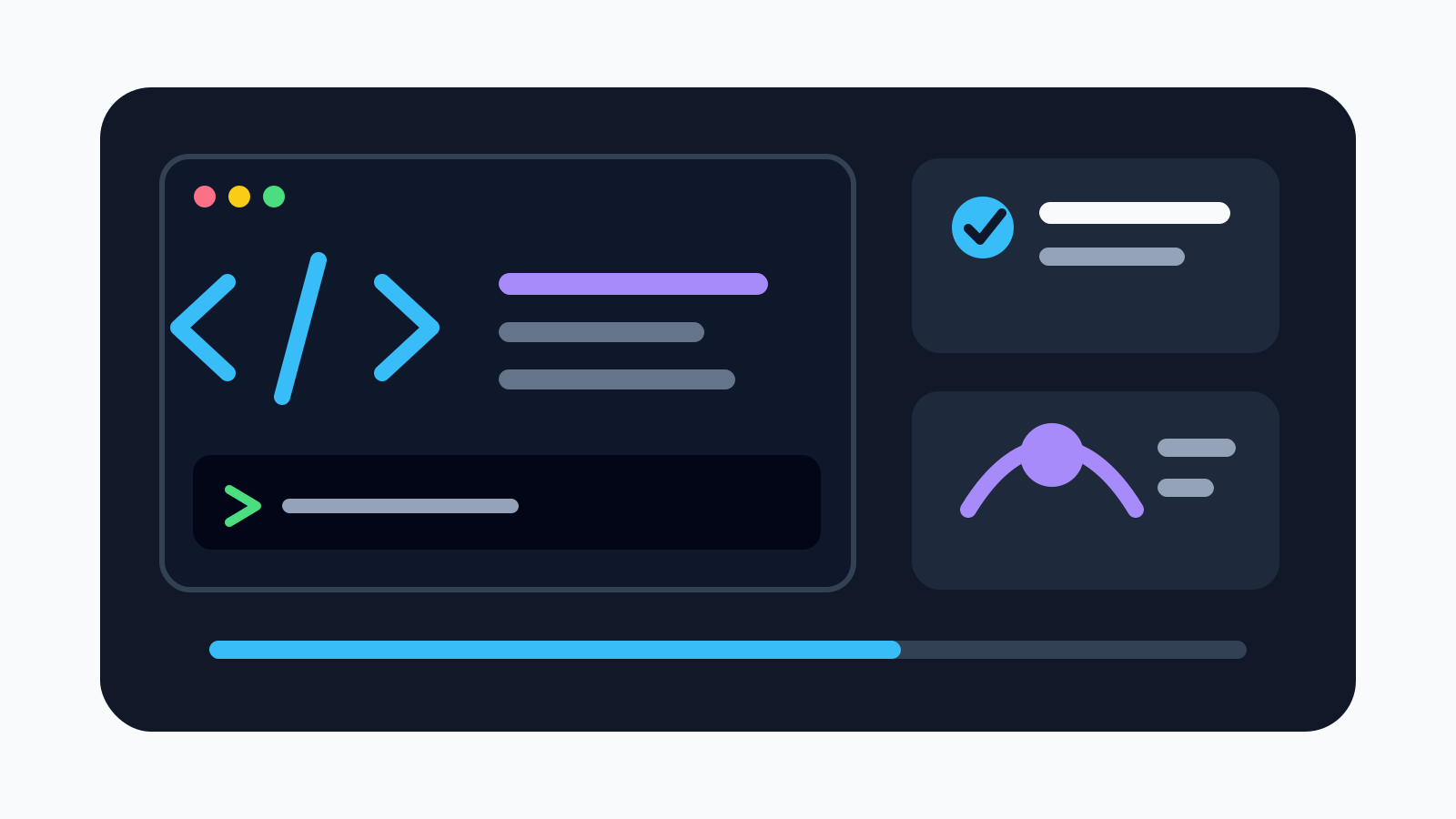
Devin is Cognition's cloud software engineering agent. A session gives the agent a development machine, shell, editor, browser, repository context, and connected tools. It can inspect an issue, propose a plan, edit multiple files, install dependencies, run tests, browse documentation or applications, and create a pull request while the developer works elsewhere.
The broader platform now includes Devin Cloud sessions, Devin Desktop and CLI experiences, repository indexing, DeepWiki, Ask Devin, automated PR review, scheduled work, APIs, and integrations with GitHub, GitLab, Bitbucket, Slack, Microsoft Teams, Linear, Jira, and selected MCP services. Enterprise deployments add organization boundaries, identity and administrative controls, custom terms, and dedicated deployment options.
This is more operationally powerful than code completion. Devin can use secrets, authenticate to sites, run arbitrary repository commands, operate a browser, react to schedules, and propose or execute deployment steps. Treat it as a junior engineer with machine access, not an infallible autonomous developer.
Designing safe tasks
Start with a bounded task and an objective acceptance test. Provide the repository, target branch, issue context, permitted files, expected behavior, prohibited changes, relevant commands, and definition of done. Smaller sessions generally improve both quality and usage efficiency. Split a large migration into independently reviewable pull requests instead of asking one session to transform the system.
Grant repository access at the smallest organizational boundary possible. Cognition's enterprise documentation notes that all members of a Devin organization can access all repositories granted to that organization; repository access is not individual within that boundary. Map organizations to teams with genuinely shared access, and do not put unrelated sensitive repositories together merely for billing convenience.
Use disposable environments and synthetic data. Store credentials through Devin's secrets controls rather than prompts or committed files, prefer short-lived OIDC identities, scope every token, and separate build-only secrets from runtime or deployment secrets. Browser cookies and MCP credentials expand the action surface and require the same review as source-control access.
Keep branch protection, required CI, code owners, dependency scanning, secret scanning, and manual approval. Review the complete diff and test changes; run tests in a separate trusted CI environment. A generated test and implementation can share the same misunderstanding. High-risk changes should require security, database, infrastructure, or domain-owner review as appropriate.
Current plans and usage
The current pricing page lists Free at $0 with a light agent quota, limited model availability, unlimited inline edits, and unlimited tab completion. Pro is $20 per month for one user with higher quotas, frontier models, cloud agents, and optional extra usage. Max is $200 monthly for one power user with a significantly larger weekly quota and no daily cap.
Teams has an $80 monthly minimum and unlimited members. A full seat is $40 monthly and includes a Pro-equivalent allowance plus Devin Desktop. A flex seat has no fixed monthly fee or included allowance and draws entirely from the team's shared on-demand credits. With fewer than two full seats, the remainder of the $80 minimum becomes prepaid shared credit. Purchased on-demand credits roll over and do not expire according to the current docs; administrators can configure auto-reload and default session spending limits.
Self-serve quotas no longer use the old public ACU plan structure. Enterprise still consumes Agent Compute Units at the rate in its order form. Do not compare a legacy ACU screenshot with today's Free, Pro, Max, or Teams plan. Obtain a live quote and record the included quota, models, API pricing, review and automation charges, support, concurrency, deployment, and renewal rules.
Usage accumulates based on work performed: planning, context gathering, task execution, browser actions, code execution, virtual-machine time, and network bandwidth. Repository size, prompt scope, model, files modified, runtime, conversation, retries, reviews, and automations all matter. The docs say sleeping sessions do not consume usage and test waits or repository cloning generally do not, while Windows sessions use approximately 9% more than equivalent Linux sessions.
Measure cost per accepted pull request or resolved issue, not per session. Track session usage, review time, merge rate, reverted changes, escaped defects, security findings, and maintenance burden. Set per-session ceilings, team budgets, alerts, and a kill switch for scheduled automations.
Data, training, and retention
The most important data distinction is plan and configuration. Cognition's security documentation says it may use customer data for model training by default. Paid-plan users can opt out in Data Controls; on Teams, only an administrator can do so. After opt-out, Cognition says data will not be used for training and Zero Data Retention will be enabled with model providers. Enterprise customer data is never used for training without express prior written consent.
Do not assume “paid” alone means the setting is off. Verify it in the correct organization, document the date and administrator, and test any newly created organization or plan migration. Also distinguish model-provider ZDR from Cognition's own product retention. The security page says data processed through Devin is retained for the customer relationship unless the customer specifies otherwise, while feedback and interaction data can be retained as needed. The platform terms define ZDR as no persistent retention and deletion after output generation, but the exact scope must match the applicable service and agreement.
The privacy policy covers user content in prompts, uploads and outputs, account and Git information, usage, device data, voice transcription, service providers, international transfers, security, legal retention, and administrator access. Shared conversation links disclose content to their recipients. Confirm deletion, backups, indexed repositories, knowledge, session history, support access, subprocessors, model providers, regions, VPC boundaries, DPA, breach terms, and the scope of SOC reports.
Automation and operational risk
Schedules, issue triggers, PR review auto-fix, Slack or Teams mentions, API sessions, MCP tools, and deployment features can begin or extend work without the same attention as an interactive session. Define who can create automations, which identity they run as, allowed repositories and branches, trigger filters, maximum usage, secret scope, approval gates, and failure notification. Prevent repeated failed triggers from consuming credit or generating duplicate pull requests.
Prompt injection can arrive through source files, documentation, issue text, pull-request comments, websites, logs, and MCP responses. Retrieved text is data, not authority. Limit tools and network access, require approval before sending messages, changing external records, merging, or deploying, and log the exact inputs, plan, commands, browser actions, identity, diff, tests, approvals, and final side effects.
Verdict
Devin is a mature option for teams that want to delegate complete, bounded engineering tasks rather than receive only inline suggestions. Its current lower-cost plans make evaluation accessible, while the enterprise product adds serious administration and deployment controls.
The purchase decision should follow a controlled pilot. Use a low-risk repository, disable training if required, configure least-privileged credentials, cap spending, and require independent CI and human review. Expand to schedules, browser actions, MCP, deployments, or sensitive code only after measured reliability, cost, data handling, and recovery meet written thresholds.