What is Pipedream?
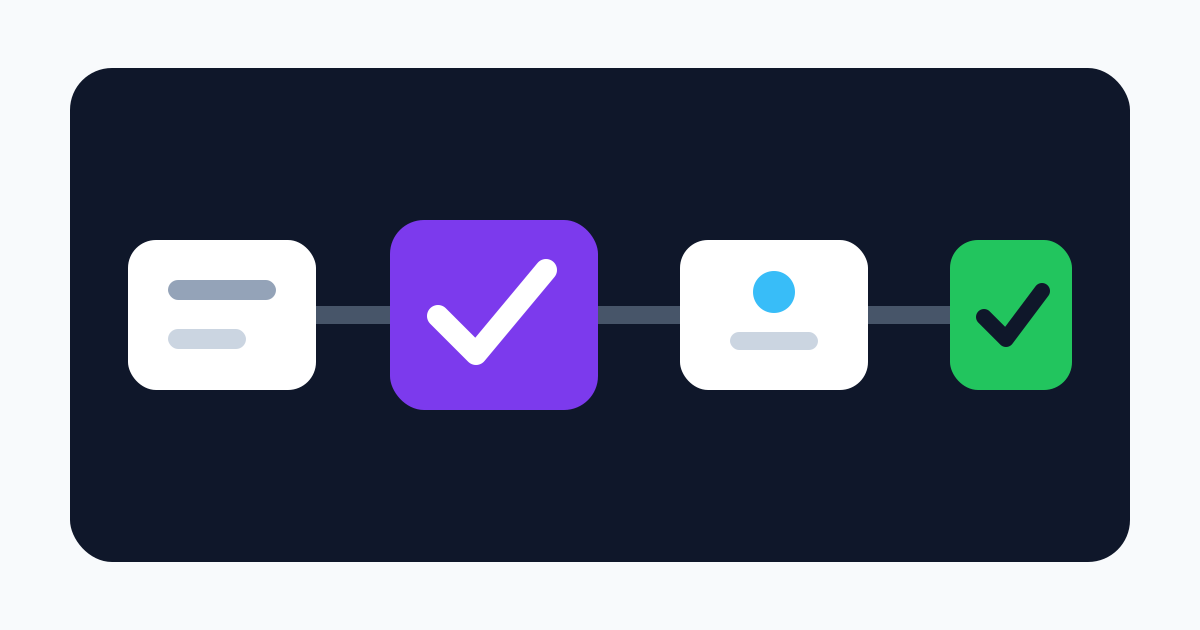
Pipedream is a developer platform for connecting applications and APIs, running event-driven workflows, and embedding integrations into products or AI agents. A workflow begins with a trigger—such as an HTTP request, schedule, or application event—and continues through ordered steps. Each step can use a prebuilt action or custom Node.js, Python, Go, or Bash code. The managed runtime removes the need to deploy a server for every small integration while preserving code-level control when a visual action is insufficient.
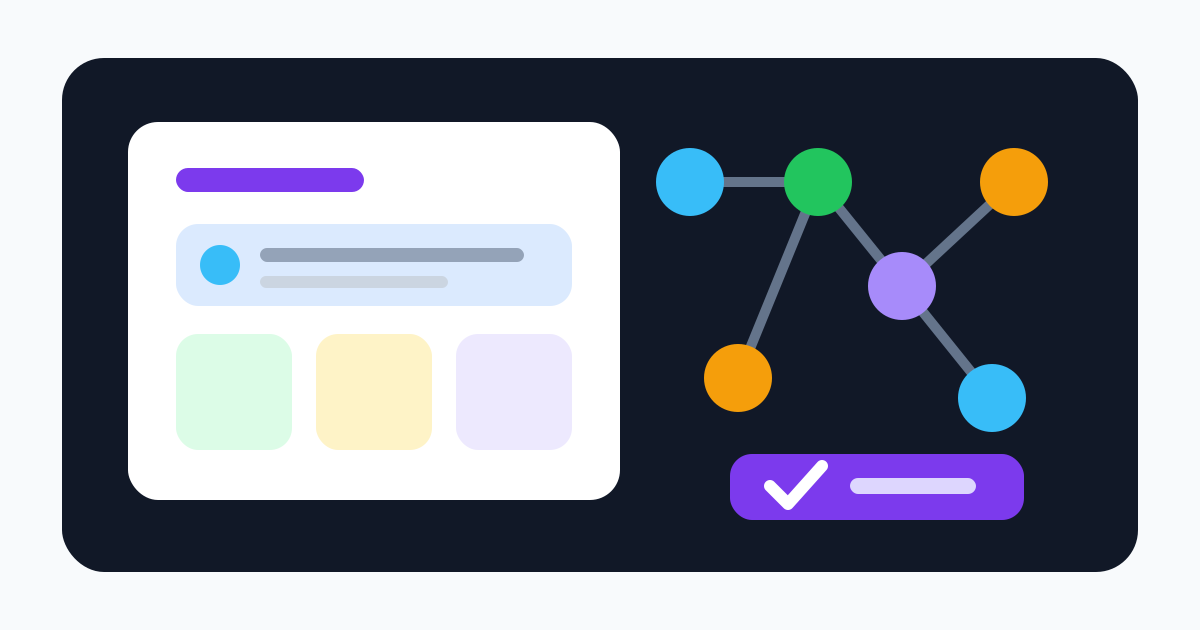
Pipedream also offers Connect, a toolkit for adding integrations to an application and managing authorization for end-user accounts. AI-agent projects can use these connections and prebuilt operations as tools, including through MCP patterns. These are distinct needs: an internal workflow using the company's own accounts is different from a SaaS product acting on behalf of thousands of users. Start with the relevant official documentation and choose the matching product path.
Building and debugging workflows
The workflow documentation describes steps that execute in sequence and pass data through the steps object. Triggers create executions, actions provide reusable API operations, and code steps handle custom transforms or unsupported endpoints. Execution details, logs, errors, and timing are visible for debugging.
That observability is valuable, but it creates a data-design obligation. A developer may accidentally return a whole API response when only an identifier is needed, print a token to a log, or preserve a customer payload in an event inspector. Map every input and exported step value. Minimize what each step returns, redact sensitive fields, avoid logging secrets, and choose retention settings that match the data's risk.
Treat community actions and third-party packages like other software dependencies. Review their code and permissions, pin or monitor critical versions, validate untrusted input, and handle timeouts and retries explicitly. An automatic retry can duplicate a payment, email, or database write unless the action is idempotent.
Pipedream's AI-assisted editing can generate or debug workflow code, but generated changes still require review. The current documentation also lists limitations for some workflows edited through its AI environment. Test development and production events separately, protect HTTP triggers with authentication or signature validation, and do not deploy generated code solely because one sample event passed.
Connect and AI-agent integrations
Pipedream Connect provides managed authentication and operations for adding integrations to a product. End users can connect their own application accounts, while the application identifies which user an execution belongs to. This can remove substantial OAuth implementation work, but the product team remains responsible for consent, scopes, account mapping, error handling, revocation, and explaining what actions the AI agent may take.
For autonomous or conversational interfaces, place confirmation between intent and high-impact operations. The model should not be able to select arbitrary accounts, construct unrestricted API calls, or silently broaden scopes. Log the business decision separately from raw sensitive payloads so an operator can audit what happened without retaining unnecessary personal data.
Pricing and cost forecasting
Pipedream provides free entry points for its quickstarts and uses paid, usage-oriented plans for larger production needs. The official pricing page should be used for current credits, limits, retention, user counts, and product-specific features because the workflow and Connect products have different cost drivers.
Forecast executions from trigger volume multiplied by the work performed per run. Include polling sources, retries, fan-out, code duration, memory, connected end users, development traffic, and desired log retention. A workflow that runs every minute even when no business event occurs may have a very different cost profile from a webhook-driven one. Create alerts and test a representative week before estimating a yearly budget.
Privacy and security
Pipedream's detailed privacy and security documentation states that it has demonstrated SOC 2 compliance, supports GDPR-oriented terms, encrypts data in transit and at rest, and documents access and incident practices. It also explains that customers must secure their own workflow code and data.
Workflow code, data stores, and some other data can remain until the user deletes them. Event data and execution logs follow account retention rules, and many internal or subprocessor logs have other schedules. Pipedream separately states that Connect API or MCP request payloads and response bodies are processed but not persisted. Do not apply that Connect statement to every standard workflow log or data store.
Use connected accounts or environment variables for secrets, authorize HTTP triggers, validate webhook signatures, restrict outbound traffic where needed, review exports and logs, and delete test events containing production data. For regulated workloads, obtain the relevant reports or addenda and confirm networking, hosting, retention, deletion, and subprocessor requirements in writing.
Alternatives and decision guidance
Pipedream is particularly strong for developers who want serverless code and a large integration catalog without maintaining integration infrastructure. Its Connect product is also relevant to software vendors adding integrations for their own users.
Compare n8n when self-hosting and a visual automation ecosystem are priorities, Make for highly visual business automation, Activepieces for an open-source automation approach, or Zapier AI for broad mainstream SaaS automation. Prototype one real workflow and compare code ergonomics, auth, error recovery, logs, data policy, and projected workload—not only the number of listed integrations.
Visit the official Pipedream website