
What is Roomote?
Roomote is a source-available cloud coding agent from the creators of Roo Code. The old roocode.com site now redirects to Roomote, while the original Roo Code editor-extension repository was archived on May 15, 2026. Roomote is a different product shape: it runs coding tasks asynchronously in isolated environments, connects to a team's repositories and operational tools, and returns pull requests, summaries, screenshots, and live previews for review.
The product can run as a managed single-tenant Roomote Cloud deployment or on infrastructure controlled by the customer. Teams bring an inference provider key and can mix models rather than being tied to one model vendor. Integrations include source-control hosts, issue trackers, chat tools, documentation, observability, databases, analytics, and design systems.
Workflow and architecture
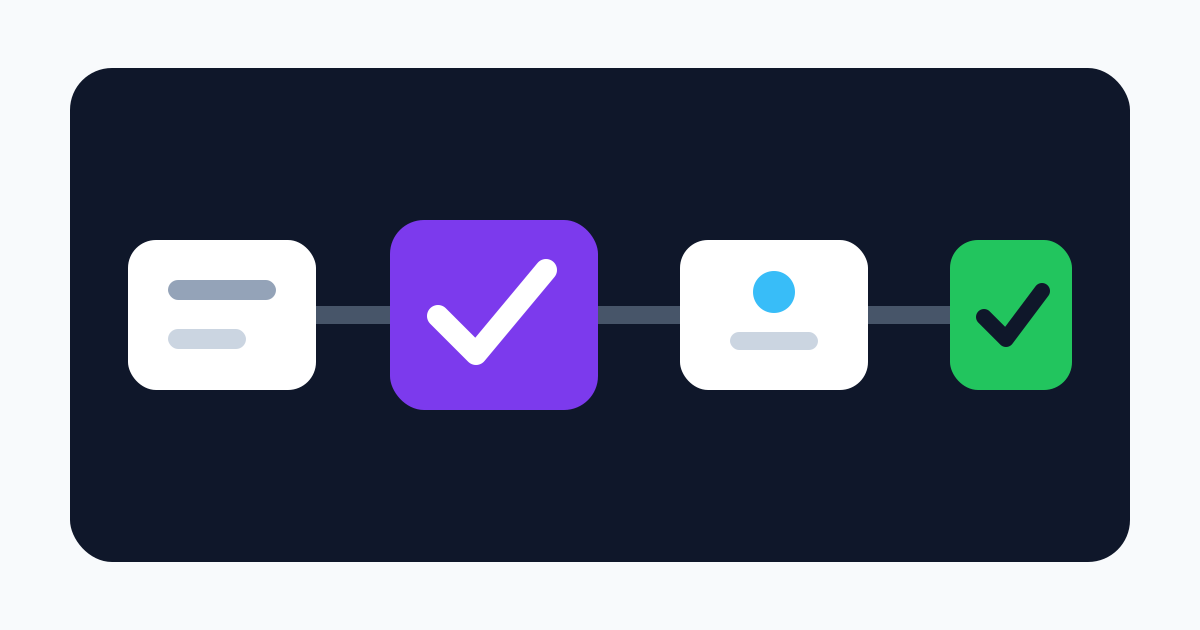
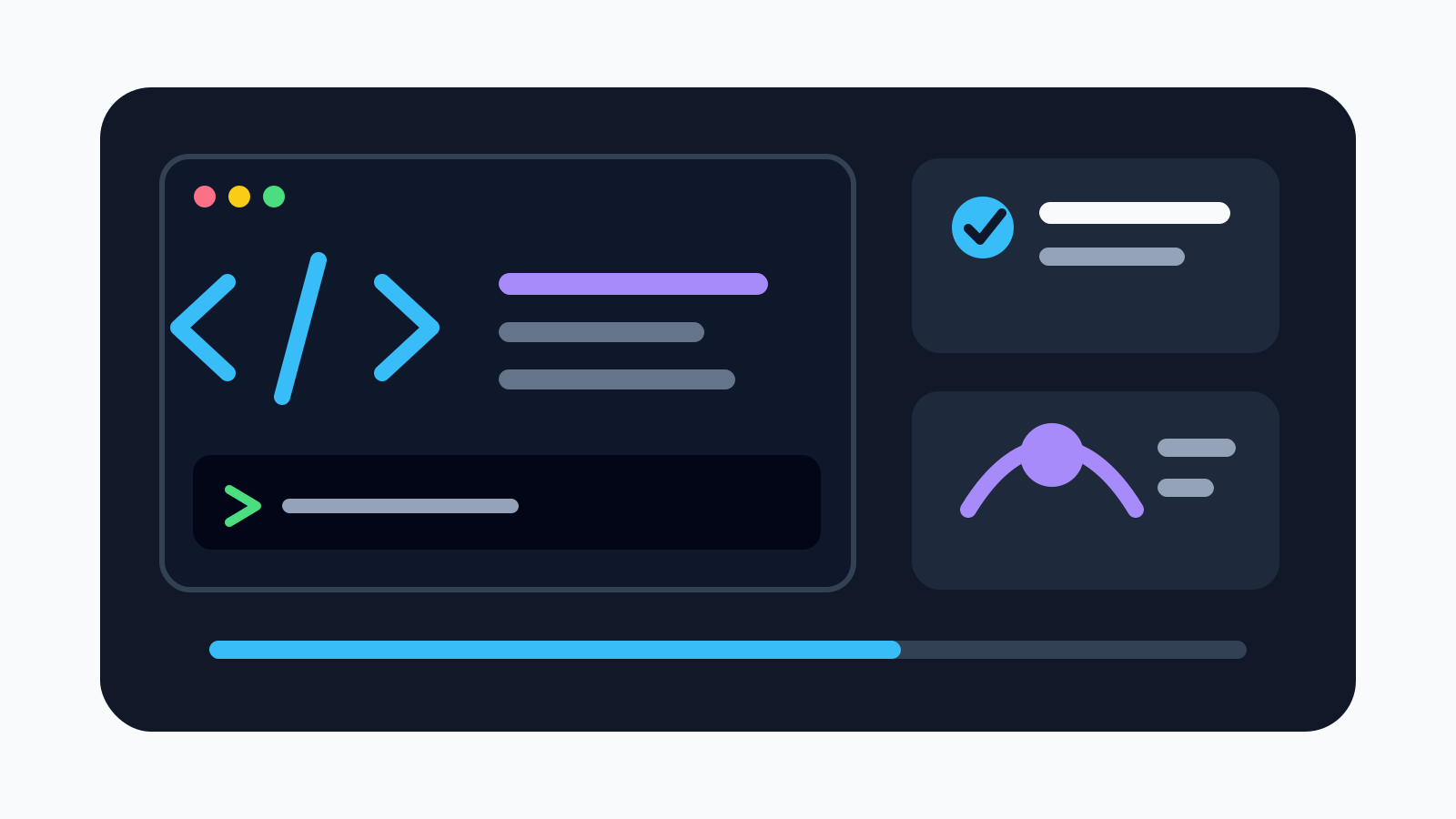
A typical task begins with an issue, chat message, automation, or web request. Roomote prepares a sandbox, checks out the repository, uses configured tools and guidance, edits code, runs the application and tests, and can ask a different model to review the change. It then opens a normal pull request with evidence such as a preview URL or screenshots.
That is a useful workflow boundary because the result enters an existing review system instead of silently modifying production. It is not a guarantee. A sandbox can faithfully run the wrong requirement; a second model can agree with the first; a preview can omit data, traffic, identity, performance, migration, and failure conditions found in production.
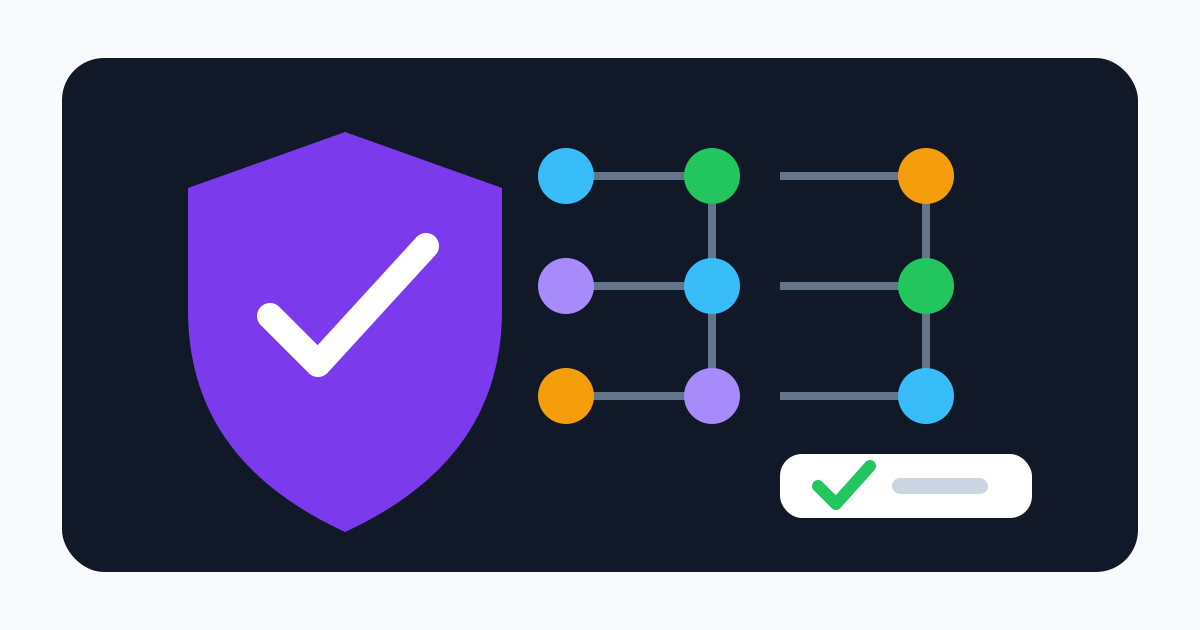
Define narrow automations. An agent that labels an issue has a smaller blast radius than one that reads observability alerts, changes a database migration, and deploys a fix. Separate read-only investigation, code modification, pull-request creation, and deployment permissions. Use repository guidance, required checks, protected branches, code owners, and environment approvals as independent controls.
Cloud versus self-hosted
Roomote Cloud is operated for the customer but described as single tenant. The vendor handles hosting, networking, sandboxes, and upgrades, while the customer supplies inference credentials. This reduces setup work but still sends code and connected-system data through the selected deployment and model providers.
Self-hosting keeps the application in customer infrastructure and gives control over networking, storage, sandboxes, models, upgrades, logs, backups, and incident response. “Your data never leaves” is only true if model inference, connectors, telemetry, and backups are also configured to remain inside approved boundaries. A remote model API creates an outbound data path even when Roomote itself is self-hosted.
Pricing and total cost
On August 9, 2026, the official pricing section listed a seven-day no-card Cloud trial. Cloud cost $49 per month for up to 10 users, $249 for up to 50, $499 for up to 100, and custom pricing above that. Self-hosting required no license for up to 10 users, then used the same listed paid tiers for larger teams.
Those prices do not include every operating cost. Cloud customers supply an inference key; self-hosted customers also pay for application hosting, sandbox compute, storage, networking, monitoring, upgrades, and operators. Parallel tasks, long repositories, preview services, databases, and high-end models can dominate the license price. Measure a representative month by issue type and cap both model spend and infrastructure concurrency.
License, security, and privacy
Roomote is source-available under the Fair Core License 1.0 with an Apache 2.0 future-license mechanism after two years for each release. Official FAQ language allows reading, modifying, self-hosting, internal professional use, and redistribution under the license, while restricting a competing commercial product or bypassing license-protected use above 10 users. Legal teams should read the exact current release license rather than treating “source-available” as a synonym for open source.
The agent can connect to code, issues, logs, documents, analytics, databases, and messaging. Every token and OAuth grant should be scoped to the smallest repository, project, and action. Keep production write credentials out of routine sandboxes, rotate provider keys, inspect audit logs, and decide what task transcripts and previews retain. Roomote says Cloud is single tenant and does not train on customer code; customers still need to verify the agreement, providers, subprocessors, deletion, backups, and incident terms.
Verdict
Roomote is compelling for teams that want an inspectable, asynchronous coding agent without accepting a shared opaque environment or single model vendor. Its real advantage is not “autonomous coding” alone, but fitting agent work into isolated execution and normal pull-request review. The best deployment uses narrow integrations, real test environments, cost limits, protected branches, and human approval. Self-hosting increases control only when the team is prepared to operate and audit the entire data path.