What is Poe?
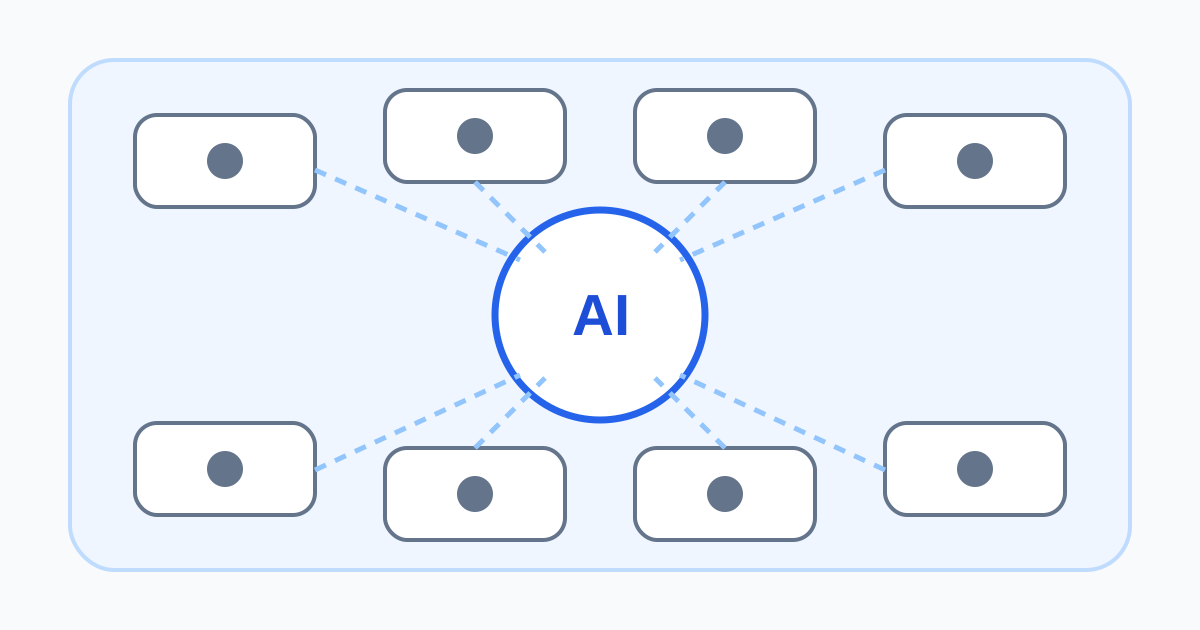
Poe is a multi-model AI platform operated by Quora. It lets users chat with a range of official and creator-built bots and apps from one account. Those experiences can use models from different providers and can cover text, reasoning, coding, images, video, and other specialized tasks.
This makes Poe different from a single-provider assistant. Its value is choice and discovery: a user can compare several bots, switch models for a task, or find a purpose-built workflow without opening a separate account for every experiment. The trade-off is that model availability, point cost, context size, privacy behavior, and output quality vary across bots.
Core Poe workflows
The simplest workflow is model comparison. Give two or three bots the same brief and compare instruction following, factual support, tone, latency, and point cost. Keep the prompt and evaluation criteria consistent. A model that produces a stronger first draft may still be worse at revisions, citations, or a domain-specific constraint.
Poe also acts as a discovery layer for bots and apps. Users can browse experiences created for a particular role or output, such as writing, coding, roleplay, images, or video. Treat the description as a creator claim until you inspect the bot, its provider, its privacy shield, and its point pricing. Popularity does not prove accuracy or safe data handling.
Creators can build prompt bots and richer apps for use inside Poe. This can be useful when a workflow benefits from reusable instructions or a public distribution channel. A creator still needs to explain what the bot does, avoid misleading claims, handle user data appropriately, and maintain the experience when an underlying model changes.
For media generation, point consumption can be materially different from a short text chat. Review the cost displayed for the selected bot before starting a large batch. Save representative outputs and point use if you need to compare value across alternatives.
Pricing and points
Poe's subscription plan page lists several paid allowances and explains that subscriptions provide more messages, access to additional models, and larger context or history limits where available. Prices can vary by billing period, currency, tax, and region.
Poe uses points rather than a single universal message quota. Each bot or app can have a different point cost, and that cost may change with model selection, input length, output length, or media generation. This flexibility supports a broad catalog, but it makes a simple “messages per month” comparison unreliable.
Before subscribing, identify the bots you will actually use and estimate their point consumption. The free experience is useful for learning the interface and checking whether the catalog has real value for your tasks. Choose a paid level from expected point use, not from the number of models named on the plan page.
Privacy shields and data handling
Poe's Privacy Center explains that conversation visibility can depend on the type of bot or app. Official bots and user-created prompt bots using supported model providers have documented protections, while other apps or features may allow a developer to receive information needed to operate the experience. Poe uses privacy shield indicators to communicate those differences.
Check the shield every time you use an unfamiliar bot. Do not assume that all experiences in a single marketplace share the same privacy terms. Group chats, memory, public sharing, creator-built apps, and feedback can change who may receive conversation data.
The Poe Privacy Policy describes account, billing, interaction, and platform data processed by Quora. Users handling sensitive material should also review the underlying model provider and bot-specific context. If the data is confidential or regulated, use an approved business product instead of relying on a consumer marketplace assumption.
Strengths and limitations
Poe's strength is convenient variety. It reduces friction when comparing models or discovering specialized experiences, and it gives creators a way to package repeatable assistants. Its flexible subscription ladder may fit users whose needs range from occasional chat to heavy media generation.
The same variety creates inconsistency. Point economics can be difficult to forecast, third-party bots require extra scrutiny, and an underlying model can change without a workflow remaining stable. Results still need factual and safety review.
Who should choose Poe?
Poe is a good fit for enthusiasts, evaluators, and creators who actively use multiple models. Users who want one stable general assistant may prefer ChatGPT, Claude, Gemini, or Microsoft Copilot. Users focused on source-led web research should compare Perplexity, while teams with strict privacy requirements should prioritize products with explicit organizational controls.
Visit the official Poe website