What is Fotor?
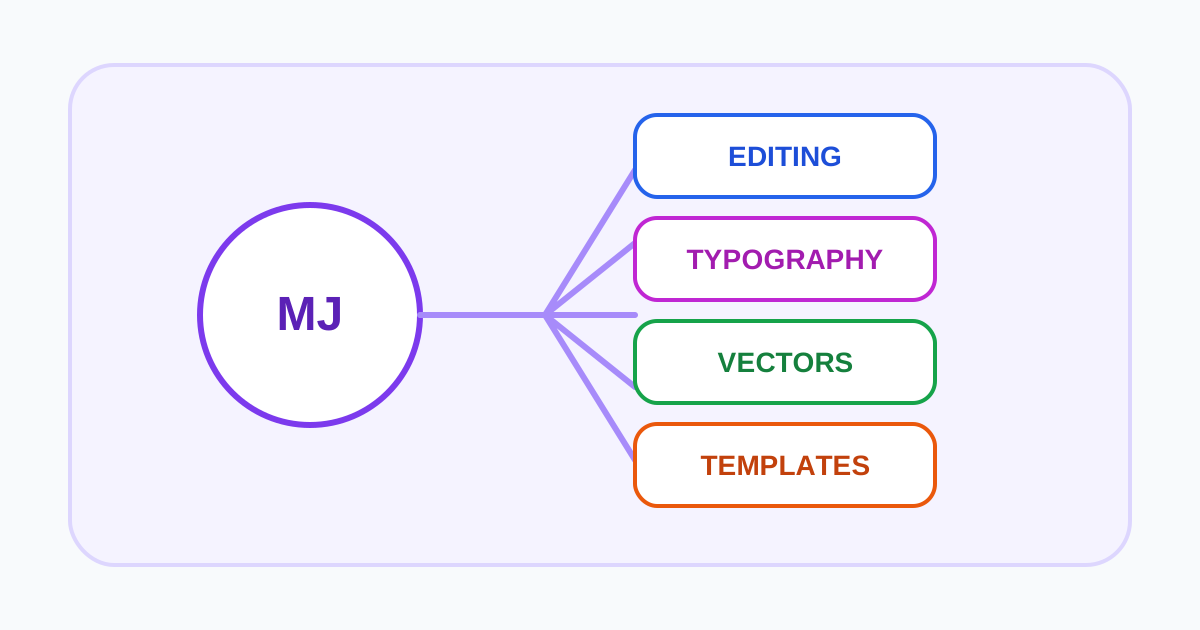
Fotor is a broad photo-editing and design platform rather than one narrow AI generator. It provides browser, desktop, iOS, and Android tools for cropping, color, effects, collage, portrait retouching, templates, social graphics, product imagery, and cloud projects. AI features add text-to-image and image-to-image generation, video, enhancement, background removal and replacement, object removal, headshots, avatars, face swap, style transfer, slides, and agent-assisted creation.
The advantage is convenience. A marketer can remove a product background, resize a design, add branded text, enhance an image, and export without moving among several specialist apps. The tradeoff is a layered product model: editing entitlements, premium design resources, export quality, storage, concurrency, agent limits, and generative credits are separate constraints.
Plans, credits, and real cost
Basic is free forever according to the current pricing page. It includes limited free credits, one concurrent generation, basic editing and templates, 512 MB of cloud storage, 30-day creation storage, and watermarked JPG, PNG, and PDF exports. Paid plans remove watermarks, enable HD and transparent PNG export, unlock more tools and assets, and increase storage, AI access, concurrency, and agent usage.
Fotor's help center currently lists 100 monthly credits for Pro, 300 for Pro+, and 1,000 for Max. The live page can personalize regional prices, discounts, and billing, so confirm checkout rather than copying an old advertised dollar amount. Annual subscriptions still issue credits monthly.
Credit cost varies sharply. Some image generation starts at one credit, face operations can cost several credits, and current video examples range from 10 credits for a short low-resolution generation to 50 for four seconds at 1080p. AI Slides lists 10 credits per presentation plus additional writing or image operations. Estimate cost using the actual tool, resolution, duration, retries, rejected outputs, and variants.
Subscription credits roll forward for up to five months while the subscription remains active and expire at subscription end. One-time purchased credits last two years; promotional credits may last only a day. Track the source and expiration of each balance. Do not assume purchased credits unlock premium editing or HD export: the help center says those can still require Pro or Pro+.
Privacy and face data
Fotor's May 2026 privacy policy says AIGC prompts and uploaded inputs are stored on AWS servers in the United States and generally remain available for the life of the account until the user deletes them. This differs from a temporary stateless generator. Establish a deletion process for client work and verify deletion from the product rather than assuming it follows export.
The policy also contains an unusual public-sharing rule: AIGC input and output from unsubscribed users using gift credits may be posted to the Fotor community by default. An opt-out and deletion path exist, but confidential or unreleased work should not rely on remembering a setting after generation. Check visibility before uploading.
When users select third-party generation engines such as Veo, Kling, FLUX, Qwen, or other listed providers, prompts and images are transferred to that provider for the requested generation. Fotor says this happens after user selection and that providers should not retain the data for other purposes. Still review the current engine list, provider terms, region, moderation retention, and whether a client permits that transfer.
AI Avatar processing uses 8 to 15 photos and a selected gender. The privacy policy classifies input and generated avatars as face data, says the input photos are deleted within 24 hours after generation, and says face data is not used to train other products, identify users, build profiles, or market. Do not upload another person's likeness without informed authorization, and avoid photos containing IDs, private locations, children, health information, or bystanders.
Commercial use and output risk
Fotor distinguishes AI output from its design resources. Its help center says AI-generated images may be used for personal and commercial purposes, but also states that Fotor does not claim copyright and cannot guarantee or grant copyright in an output. The user remains responsible for the prompt and result. Similarity to brands, characters, artists, people, copyrighted works, or training examples can create risk regardless of a platform's commercial-use statement.
Templates, stock elements, fonts, effects, and other resources follow separate licenses. Free resources are generally personal-use only for free users; Pro and Pro+ grant different commercial rights, and redistribution or resale of the underlying resource is restricted. Client work may require the proper subscription for the client. Record which assets and plan applied at export and keep a license snapshot.
Review outputs for logos, faces, anatomy, text, artifacts, deceptive edits, unsafe stereotypes, and factual claims. Use originals with documented rights, obtain releases, run reverse-image and trademark checks for material campaigns, and keep a human editor in control.
Verdict
Fotor is a capable all-in-one option when speed and breadth matter more than professional compositing depth. Its free tier is useful for testing, while paid plans combine editing, assets, storage, HD export, and monthly generation capacity.
The best evaluation uses a real workflow and budget: count successful deliverables rather than generations, inspect export quality, check template licensing, test deletion and visibility, and document which model receives each upload. It is a practical creative tool when credits, privacy, likeness rights, and asset licenses are managed deliberately.