What is Adobe Firefly?
Adobe Firefly is a generative creative workspace that spans image creation, image editing, video, and audio. It is also the name Adobe uses for its own family of generative models and related features across products. Those two meanings should not be conflated: the Firefly application can expose both Adobe models and selected third-party partner models, while Firefly-powered features also appear in other Adobe software.
For buyers, the practical appeal is continuity. A concept generated from text can move into a more conventional editing process rather than remain trapped in a prompt gallery. This can be valuable for creative teams that already deliver through Photoshop, Illustrator, Premiere Pro, Express, or other Adobe surfaces. The benefit is operational integration, not a promise that every generation will be production-ready.
Image, video, audio, and generative editing
The current Firefly product page presents a broad set of creative tasks. Image workflows include text-to-image and generative edits such as adding, removing, or replacing visual areas. Video and audio capabilities have expanded the product beyond a still-image generator, and model selection can let users compare different aesthetics or task strengths within the workspace.
Before adopting it, map the path from prompt to delivery. Determine which model creates the draft, which application performs detailed corrections, where brand assets are stored, who approves output, and what metadata travels with exported files. If a project requires exact product packaging, readable legal copy, accessible contrast, or repeatable characters, keep those checks outside the generator.
Partner-model access is convenient, but it creates a governance step. Record the model used for each approved asset. A team should not assume that Adobe's statements about its own Firefly models automatically describe every third-party model available through the interface.
Plans and generative credits
Adobe's Firefly plans page lists current free and paid access, generative-credit allowances, and plan inclusions. Prices and promotional offers change, so this review does not freeze a monthly figure.
Credits can be consumed differently depending on the operation, media type, resolution, duration, or selected model. Estimate cost with a representative production month: concept generations, iterations, video seconds, audio operations, editing actions, failed attempts, and final exports. Also determine whether the required Creative Cloud application is included or purchased separately.
Free access is useful for evaluating interface fit, but it may not reflect the speed, premium models, capacity, or integrations a production team needs. Compare total workflow cost with alternatives rather than comparing only the number of advertised generations.
Commercial-use claims, provenance, and privacy
Adobe states that outputs from Adobe Firefly generative AI models are designed to be safe for commercial use and describes how its first-party models are trained. Treat this as Adobe's product and contractual position, not as an independent legal guarantee. The generative AI user guidelines still require lawful inputs and use, and partner models may bring separate considerations.
Commercial teams should check brand marks, recognizable people, copyrighted characters, protected designs, and factual product details. Content Credentials or other provenance metadata can support transparency, but they do not replace rights clearance or human approval. Record which model, input assets, edits, and reviewers produced a final deliverable.
Adobe's privacy policy governs personal-data processing, while business customers may have additional agreements and admin controls. Review retention, model-improvement settings, cloud storage, connected applications, subprocessors, deletion, and region-specific terms before uploading confidential source material.
Who should choose Firefly?
Firefly is a strong candidate for teams that want generative exploration to lead into a familiar editing ecosystem. It may reduce file handoffs and make AI features available within established creative processes. Its breadth also increases the need to understand model selection and credit economics.
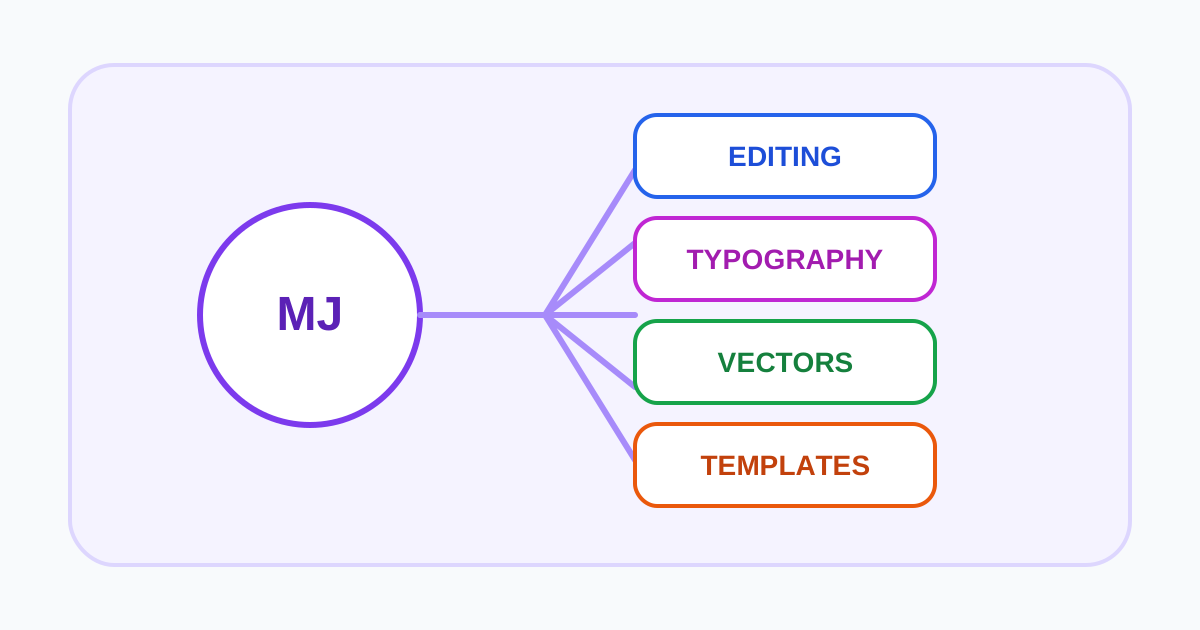
Compare Midjourney for intensive visual exploration, Recraft for vectors and brand-style assets, Canva Magic Studio for template-led communication, and Clipdrop for focused utilities such as cleanup or background removal. Run the same representative job through the complete workflow, not only the generation step.
A production-ready pilot
Use one cleared campaign brief and follow it from concept through final export. Include a text-heavy graphic, a product edit, a short motion asset, multiple aspect ratios, and at least one revision from a stakeholder. Record the selected model, generations, credits, rejected options, editing time, provenance metadata, accessibility work, and final approval. Then repeat a key edit in the team's existing software to isolate Firefly's actual time saving.
Before adoption, confirm who can select partner models, upload references, share projects, and spend credits. Test brand consistency, reproducibility, export quality, deletion, and handoff to a colleague. A strong result is not merely an attractive image; it is an asset whose inputs, rights, cost, edits, and approval can be explained later.
Visit Adobe Firefly