What is Character.AI?
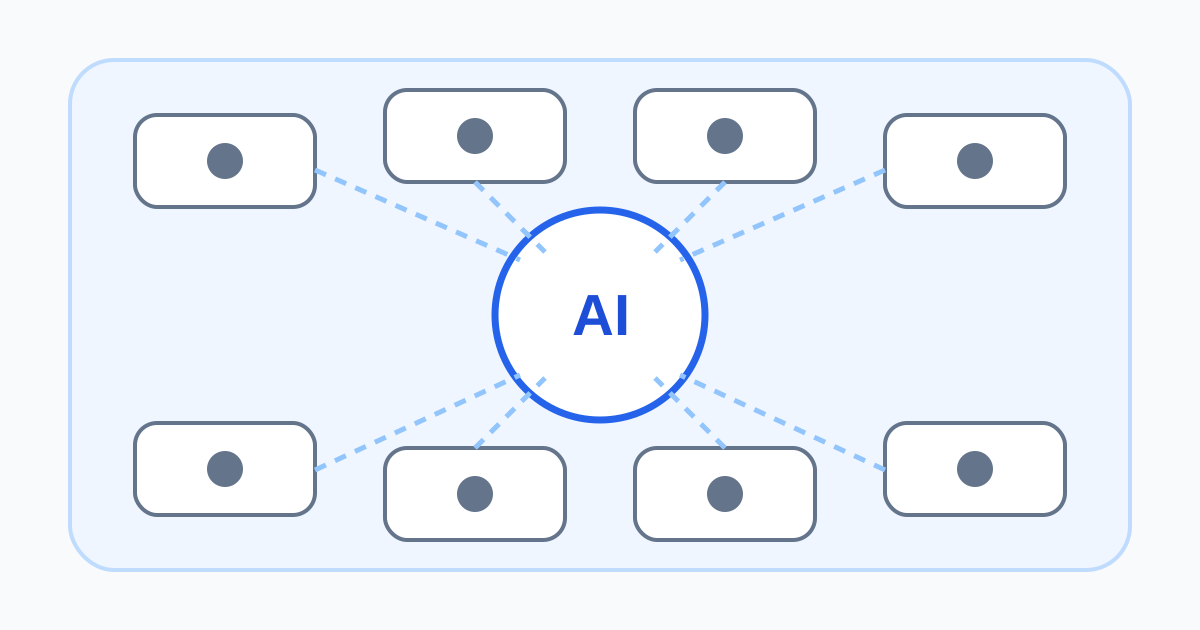
Character.AI is an interactive entertainment service built around conversations with AI personas. Users can browse characters created by the company and community, enter an ongoing fictional chat, make a persona for themselves, or define a new character with a name, greeting, description, voice, and behavioral instructions. The main use cases are roleplay, collaborative storytelling, imaginary debate, fandom-style interaction, and conversational experimentation—not dependable research or professional advice.
That positioning is important. A character may speak confidently, remember details unevenly, invent events, or act emotionally attached because those behaviors make fiction engaging. The interface can feel more personal than a conventional assistant, but the output remains generated text and media. Character.AI's own safety materials describe the product as an interactive entertainment platform and apply additional warnings and controls for younger users.
How the experience works
The discovery layer offers a large catalog of user-created characters. After opening one, a user can chat by text and, where available, use voice calls, voice messages, swipes, continuation controls, images, or other experimental formats. Character creators influence the opening message, profile, example dialogue, and hidden definition; the model then generates each reply from that setup and conversation context.
A useful workflow starts with an original scenario and a clear boundary. Define who the character is, what world it belongs to, which topics are excluded, and whether the conversation is private experimentation or material intended for publication. Save any valuable prose outside the service, because model behavior, memory, features, moderation, and character availability can change.
Character.AI is not a source-backed answer engine. Even a character named after a historical figure, expert, or public person does not verify claims against authoritative records. For factual work, use primary sources and a research-oriented assistant; for fictional improvisation, evaluate continuity, tone, consent, and originality instead.
Pricing and c.ai+
Free users can access the core chat experience, while ads, model access, memory, speed, and feature limits distinguish the paid tier. On August 9, 2026, the official c.ai+ page listed $9.99 per month or $94.99 per year. It advertised access to newer models, better memory, no slow mode, ad-free chats, unlimited voice calls, more controls, early features, and community access.
Those are service entitlements rather than a promise that every conversation will be accurate, safe, or permanently remembered. Before paying, test the actual characters and devices you care about, confirm renewal and cancellation terms, and decide whether reduced waiting or stronger memory materially improves your use case.
Safety, age, and emotional risk
The Safety Center says accounts require a birthday and a minimum age of 13, or 16 for users in Europe. It describes a distinct under-18 model, more conservative classifiers, a narrower searchable character set, input and output controls, reporting, and human moderation. These are meaningful safeguards, but automated filters can miss harmful material or block benign fiction.
Teen access therefore still needs ordinary family judgment. Discuss that characters are not people, do not keep secrets with the service, and cannot diagnose distress or replace real support. Watch for sleep disruption, compulsive use, isolation, sexual or self-harm content, and emotional dependency. If a conversation concerns immediate safety, leave the character and contact a trusted person or qualified local service.
Privacy, training, and creator rights
Character.AI's privacy summary says it collects account information, interaction and usage data, IP addresses, and connected-service data. It uses information to operate, personalize, secure, improve, and support the service. Its March 2026 training-data documentation explicitly lists user text content and interaction data among model-development sources, alongside public, synthetic, internal, licensed, and third-party data.
Do not enter private health details, workplace secrets, unreleased creative material, passwords, or someone else's personal data. Review deletion and download controls in the current region, and remember that deleting an account is different from guaranteeing removal from every trained model or retained legal record.
Public character creation adds intellectual-property risk. A name, image, voice, persona, or dialogue may implicate copyright, trademark, publicity, privacy, or impersonation rules. Official contest notices also remind creators that Character.AI's terms grant the service a license to submitted characters and content. Build original characters, keep source assets, and read the current terms before publishing or commercializing work.
Verdict
Character.AI is a distinctive choice for roleplay and interactive fiction, especially when discovery, voice, and community-created personas matter. It is a poor substitute for evidence, professional care, or human relationships. The responsible way to use it is to keep the purpose fictional, limit sensitive data, create only what you have rights to share, preserve valuable writing elsewhere, and treat age gates and filters as layers—not guarantees.